November 16, 2026
SEO for Roofing Contractors: How to Generate More Local Leads
By @andreoumh626
Roofing is one of the most competitive local service categories online. It is also one of the most urgent. Homeowners rarely browse roofers for fun. They search when a storm rolls through, when a ceiling stain spreads, or when a home inspector flags shingle damage before closing. That urgency changes how SEO works for this trade.
A roofing company does not need vague traffic from three states away. It needs qualified local searches from people who are ready to call, request an inspection, or compare estimates within a small service radius. That is why seo for roofing contractors is less about chasing vanity rankings and more about showing up in the right places at the exact moment demand appears.
I have seen roofing companies invest heavily in glossy websites and still lose leads to smaller competitors with half the design budget. The difference usually comes down to local visibility, trust signals, and site structure. If Google cannot easily understand where you work, what services you provide, and why people trust you, your site will struggle no matter how polished it looks.
Why roofing SEO behaves differently from other local services
Roofing sits in an unusual corner of local search. Search volume often spikes after weather events. Emergency repair searches convert differently from full replacement searches. Insurance-related jobs create longer sales cycles. Commercial roofing has a completely different buyer journey from residential roofing, even when the same company offers both.
That means the SEO strategy has to reflect how people actually search. Someone with active leaks may type “roof repair near me” and call the first credible company with strong reviews and a clear phone number. A homeowner planning a replacement may spend a week comparing materials, warranties, financing, and timelines. A property manager looking for commercial service may care more about documentation, safety procedures, and response speed than about your gallery photos.
Good roofing SEO accounts for those different intents. It does not dump every service onto one page and hope for the seo services montgomery tx best. It creates clean pathways for each need, each city, and each stage of the buying process.
There is also a trust hurdle in roofing that many other trades do not face at the same level. Homeowners have heard stories about storm chasers, insurance scams, and disappearing contractors. Search visibility alone will not win the click. Your online presence has to signal legitimacy fast.
Start with the local search results that actually drive calls
When roofers talk about “ranking on Google,” they often mean the standard organic results. Those matter, but local leads often come first from the map pack, the Google Business Profile, and branded searches that happen after a homeowner hears your name from a neighbor or sees a yard sign.
For many contractors, the fastest gains come from tightening up local SEO fundamentals before touching broader content strategy. A well-optimized profile with strong reviews, accurate service areas, and relevant photos can drive calls faster than publishing ten generic blog posts.
This is especially true in dense service areas where several companies are targeting the same towns. If your business serves places like Montgomery or The Woodlands, terms such as local seo montgomery tx or local seo the woodlands tx matter because local relevance becomes the deciding factor. Google wants to show businesses that clearly serve that area, not just companies that stuffed the city name into a footer.
Your Google Business Profile is often your real homepage
For local service businesses, the Google Business Profile is usually the first impression. People may call directly from it without ever visiting the website. If that profile is neglected, you are leaving money on the table.
Google business profile optimization Montgomery TX is not just a matter of filling in a few blanks. The profile needs accurate categories, a service description that reflects real offerings, current business hours, service areas that match the territory you can actually cover, and images that look like they came from real jobs, not a stock photo library.
Roofers should upload photos that prove local presence and quality of work. Crews on site, material closeups, completed projects, branded trucks, before-and-after shots, and images tied to actual neighborhoods all help. The strongest profiles look active and lived-in. They give the sense that a real company is out working every day.
The Q&A section deserves attention too. It often goes ignored, yet it is a useful place to answer the questions homeowners ask before they call. Do you handle insurance claims? Do you offer emergency tarping? What roofing systems do you install? Do you inspect attics during leak diagnostics? Clear answers can improve conversion even if they do not directly move rankings.
Reviews are even more important.
Reviews do more than build trust
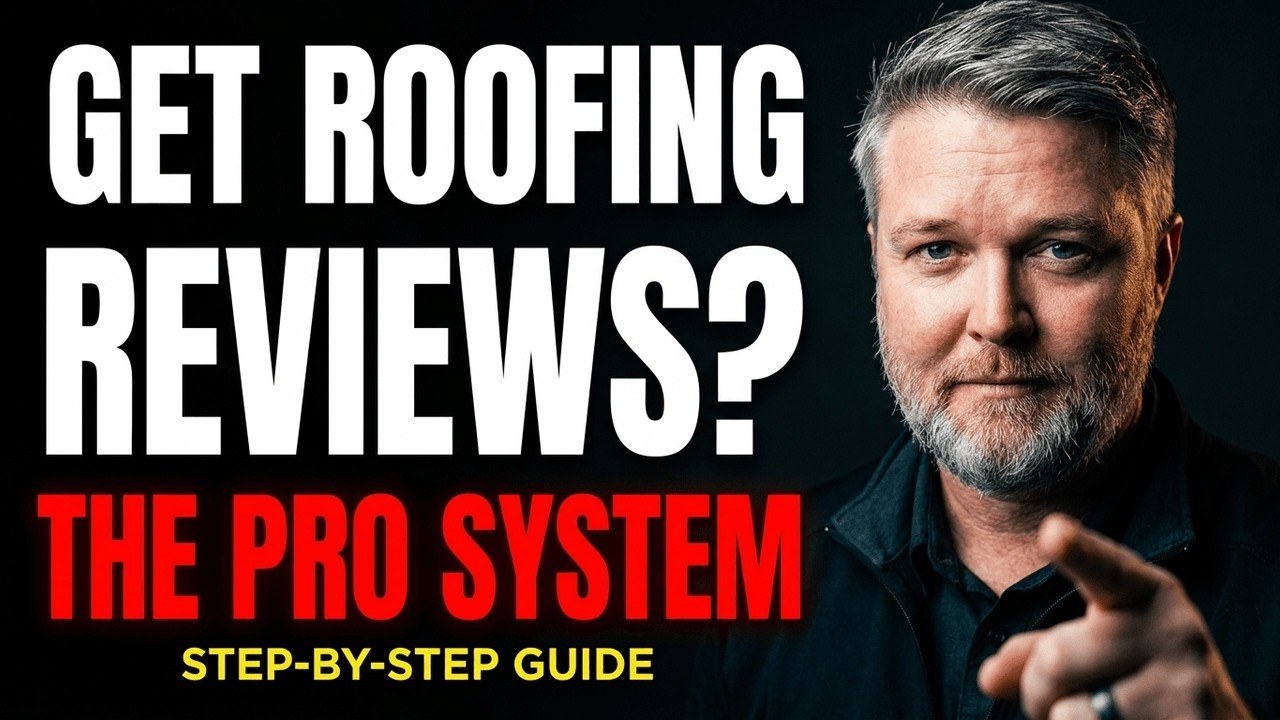
Most roofers understand that reviews matter. Fewer understand how directly reviews shape local SEO and lead quality. A steady review profile tells Google that the business is active. Detailed reviews filled with real service language also help reinforce topical relevance. Just as important, reviews filter leads before they ever contact you.
A homeowner deciding between two roofers will often pick the one with recent, specific, believable praise. “Great company” is nice. “They found storm damage my adjuster missed, documented everything, replaced flashing around the chimney, and kept the yard clean” is better. That kind of review lowers hesitation.
Review management Montgomery TX or any similar local review effort should focus on consistency, not bursts. A company that gets fifteen reviews after a storm and then nothing for eight months looks uneven. A company that steadily earns two to six quality reviews per month often performs better over time.
One roofing client I worked with had plenty of satisfied customers but almost no review process. The owner assumed happy people would leave feedback on their own. Most did not. Once his office began sending a simple text request after job completion and again after final walkthrough, review volume increased significantly within one quarter. The important part was not the script. It was the timing. Customers were asked when the relief of a completed project was still fresh.
Here are the review habits that usually work best:
- Ask soon after the job is complete, while the homeowner still remembers the crew, communication, and result.
- Make the request easy, ideally with a direct review link sent by text or email.
- Encourage honest detail rather than generic praise.
- Respond to every review, including negative ones, in a calm and professional tone.
- Feed the strongest review themes back into your website copy and service pages.
That last point gets missed. If customers repeatedly praise cleanup, responsiveness, and insurance documentation, those are not just compliments. They are conversion clues. Use them.
Service pages should match how people search
Many roofing sites are too broad. They have a homepage, an about page, a contact page, and one catch-all services page with a few hundred words. That structure makes it hard for search engines to understand what should rank for specific queries.
If you offer residential roof replacement, roof repair, storm damage repair, gutter installation, skylight repair, metal roofing, flat roofing, or commercial roofing, each meaningful service should have its own page. Not every variation deserves a page, but the main categories do.
This matters because “roof repair” and “roof replacement” are not the same search. “Metal roofing contractor” attracts a different audience than “asphalt shingle roofer.” Commercial buyers do not want to land on a page written entirely for homeowners. A company doing both residential and commercial work should separate those paths clearly.
The same principle applies to location pages, but with caution. If you serve ten nearby towns, you may need pages for those towns. Each page should reflect real differences in service area, project types, travel expectations, and local proof. Thin duplicate pages with swapped city names rarely help and can become a maintenance burden.
A strong location page for Montgomery or The Woodlands would include local project context, storm patterns common to the area, neighborhoods served, permit or HOA considerations if relevant, and real photos from jobs nearby. That is a lot stronger than writing “We are the best roofer in Montgomery” six times.
Contractors searching for seo services Montgomery TX or seo services The Woodlands TX often need this exact fix. They do not necessarily need more pages. They need better pages that map to actual local demand.
Content should answer real roofing questions, not chase fluff
Roofing companies are frequently told to “start a blog,” then handed a list of generic topics that nobody in their market cares about. The result is a graveyard of thin articles like “Top 5 Benefits of a New Roof” or “Why Roofs Matter for Your Home.” Those do little for rankings and even less for leads.
Content works when it addresses the real questions buyers ask before hiring you. The best topics usually come straight from the sales process. What makes an insurance claim easier? How long can a homeowner wait after hail damage? What signs suggest flashing failure rather than full roof replacement? Is a repair enough, or is replacement more cost-effective? What should a homeowner expect on installation day?
Those topics attract more qualified searchers because they match the decisions people are actively making. They also give your company a chance to demonstrate judgment. Roofing is rarely one-size-fits-all. A good article can explain when a minor repair is sensible and when patching becomes false economy. That kind of nuance builds credibility.
Seasonality matters too. Before storm season, educational pages about inspections, emergency response, and documenting damage can perform well. During slower months, comparison content around materials, ventilation, underlayment, and financing may support longer-cycle leads.
The goal is not to publish constantly. The goal is to publish usefully.
Technical SEO matters, but not in the way most contractors think
Some agencies overcomplicate technical SEO when speaking with contractors. The basics are what usually move the needle first. Your site should load quickly on mobile devices, use clean navigation, include crawlable text rather than image-heavy layouts, and make contact paths obvious.
Roofing traffic is heavily mobile. People search from driveways, offices, kitchen tables, and sometimes under stress. If the site is slow, the call button is buried, or the quote form is clumsy, rankings will not save conversion.
Technical issues often show up in ordinary ways. Pages are not indexed because they were accidentally noindexed during a redesign. Service pages all point to the same title tag. Images are huge and uncompressed. Phone numbers differ across directories. The site has separate pages for HTTP and HTTPS. None of this is glamorous, but it affects performance.
Structured data can help search engines understand your business, services, reviews, and location details more clearly. It is not magic, but when combined with strong local signals, it supports clarity.
For roofers, the key technical question is simple: can both Google and a stressed homeowner immediately understand what you do, where you work, and how to contact you?
Authority in roofing comes from proof, not puffery
A lot of contractor websites rely on claims like “best roofer,” “trusted experts,” or “quality craftsmanship.” Those phrases are harmless in small doses, but they do not create authority by themselves. Proof does.
Authority comes from project depth, strong visual evidence, certifications where relevant, review language, case studies, and signs of local reputation. If your company has repaired storm damage in a specific neighborhood, show it. If you have experience with standing seam metal roofs, TPO systems, or insurance supplements, explain it in plain language. If your crews follow a detailed cleanup process to protect landscaping, say so and show it.
Even a short case study can outperform broad marketing copy. For example, a page describing a recent hail damage replacement in The Woodlands, with photos, the roof type, the homeowner’s concerns, and the final outcome, gives search engines and buyers much more to work with than a generic paragraph about “excellent service.”
This applies to seo for general contractors as well, but roofing has a sharper need for visible proof because the stakes are higher. Roofing jobs are expensive, disruptive, and tied to home protection. Homeowners want reassurance that the company has done this before, and done it well.
Local links still matter, but relevance matters more
Backlinks remain part of SEO, though their role is often misunderstood by small service businesses. Roofing companies do not need random directory spam or paid links from unrelated websites. They benefit more from legitimate local and industry-relevant mentions.
That can include local chambers, supplier relationships, sponsorships, community organizations, neighborhood publications, reputable business directories, and local news coverage tied to storm response or community service. The strongest links tend to make sense even if SEO did not exist.

I once saw a roofing company gain more useful visibility from a community storm preparedness seminar than from months of low-quality link outreach. The event led to a local article, several neighborhood mentions, branded searches, and a small uptick in review volume from residents who already knew the name. That is the sort of signal stack that compounds over time.
AI search is changing how homeowners discover contractors
Search behavior is shifting. Some homeowners still type short queries into Google. Others ask full questions through voice search, mobile assistants, or AI-driven search experiences that summarize answers before showing websites. That is where ai search optimization Montgomery TX and similar efforts start to matter.
The phrase sounds newer than the underlying principle. Search engines and AI-assisted results favor content that is direct, structured, and genuinely helpful. Pages that clearly answer questions, define services, explain processes, and connect those answers to a real local business are more likely to be surfaced than vague marketing pages.
For roofing contractors, this means your website should do a better job of answering natural-language queries. A homeowner may not search only “roofer The Woodlands.” They may ask, “Do I need a full roof replacement after hail damage in The Woodlands?” or “How quickly should I fix a leak after a storm in Montgomery?” If your content addresses these questions clearly, you improve your chances across both traditional and emerging search formats.
This does not replace local SEO. It extends it. The businesses that will benefit most are the ones that already have strong local signals and useful site content.
What roofing companies should measure
Too many roofing companies judge SEO by one number, often rankings for a favorite keyword. That is understandable, but incomplete. Good SEO should be measured by lead quality, booked inspections, call volume from target areas, map visibility, organic form submissions, and the percentage of traffic landing on money pages.
Not every click has equal value. A few visits from homeowners ready to replace a roof in your core service area can be worth more than hundreds of blog visits from outside your market.
Watch for patterns. Are your map views increasing while calls stay flat? That may point to weak reviews or a weak profile. Are service pages getting traffic but not leads? The page may rank but fail to reassure. Are you getting traffic from the wrong cities? Your location strategy may be too broad. Are commercial pages attracting homeowners? Your messaging may be muddy.
Useful SEO reporting should help an owner make decisions, not just admire charts.
When to hire help, and what to ask before you do
Some roofers can handle parts of local SEO internally, especially profile management, review collection, and basic content updates. Others need outside help because the work requires consistency, technical skill, and a fair amount of writing. The real question is not whether you can do it yourself. It is whether you can do it well enough, long enough, while still running crews, estimates, supplements, and operations.
If you are considering a partner after searching “seo digital marketing agency company near me,” ask practical questions. Have they worked with local service businesses in competitive markets? How do they approach service and location pages? What is their plan for Google Business Profile management? How do they define success beyond rankings? How do they handle review strategy? What is their process for technical fixes and content development?
Be careful with any provider that promises instant rankings, guaranteed lead volume, or hundreds of links per month. Roofing SEO can produce excellent returns, but it tends to reward disciplined execution rather than shortcuts.
A dependable strategy usually includes a few core elements working together:
- A technically sound website with strong service pages and clear contact paths.
- A well-managed Google Business Profile aligned with your true service area.
- A steady review process that builds both trust and local relevance.
- Local content and location pages rooted in actual customer questions and job history.
- Ongoing measurement tied to leads, not vanity metrics.
The contractors who win local search usually do simple things better
The roofing companies that dominate local results are not always the largest and they are not always the flashiest. More often, they are the ones that consistently send the right signals. Their contact information is accurate everywhere. Their Google profile is active. Their reviews are recent and specific. Their service pages are focused. Their content reflects how real customers think. Their website makes it easy to trust them and easy to call them.
That may sound basic, but basic done thoroughly is rare.
If you are a roofer trying to generate more local leads, start there. Tighten the foundation before chasing advanced tactics. In a market where homeowners move quickly and trust is fragile, the contractor who shows up clearly, locally, and credibly has a strong edge. SEO can create that edge, but only when it is built around the realities of roofing, not generic marketing advice.
About Results Digital
Results Digital is an internet marketing service in Montgomery, TX for contractors and trades: local SEO that ranks them in the Google map pack and AI search, and Google Ads (with Local Services Ads management) optimized to booked jobs. Month-to-month, one client per trade per market.
Montgomery, TX 77316 · Serving Montgomery County, The Woodlands, Conroe and greater Houston
Phone: (832) 850-2641
Website: resultsdigitalus.com
Find us on Google Maps
❧